 Save to Pinterest
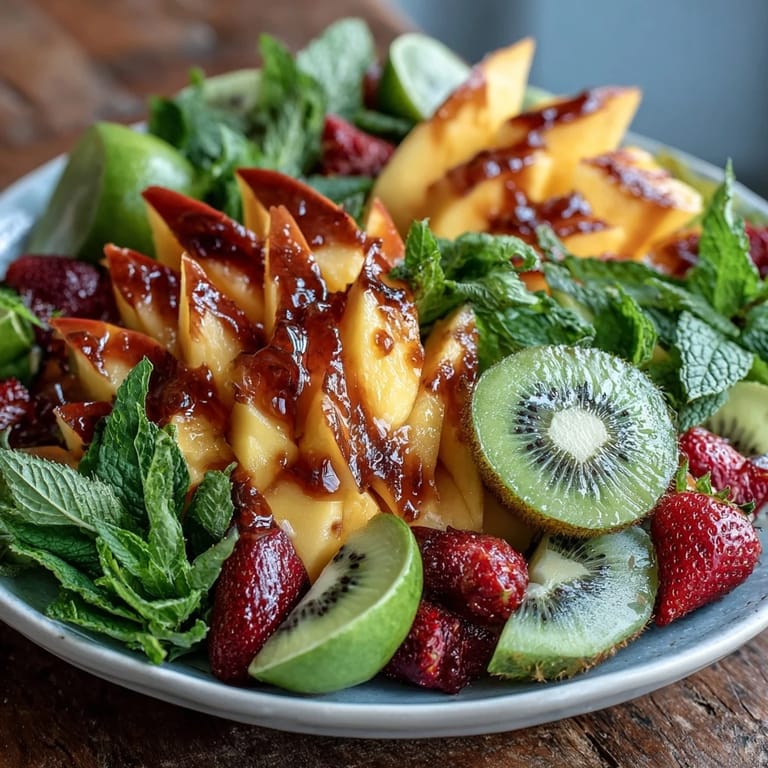
 My sister called mid-morning asking if I could put together something stunning for her impromptu garden party that afternoon. I had nothing planned, no fancy recipes bookmarked, just a quiet Saturday ahead. But the farmers market had been exceptionally generous that week, and my counter was overflowing with mangoes so fragrant I could smell them from across the kitchen. That's when it hit me—not a cooked dish, but a living canvas of tropical colors that would practically arrange itself. Two hours later, watching guests reach for slices of dragon fruit and mango like they were pieces of edible art, I realized the most memorable spreads are sometimes the ones that require nothing but a sharp knife and good taste.
What surprised me most was watching a group of kids who normally picked at fruit platters become genuinely excited about the arrangement. My nephew kept asking why the colors looked "so pretty and arranged like a rainbow," and suddenly I understood that presentation isn't just for Instagram—it actually changes how people experience food. That day taught me that a beautiful fruit display isn't showing off; it's an invitation to enjoy something good.
Ingredients
- Ripe mangoes (2): Look for ones that yield slightly to pressure and smell sweet at the stem end—they should be fragrant enough that you want to bury your face in them.
- Large pineapple (1): Choose one that's golden yellow with a slight give when you squeeze it gently; the crown should look fresh and vibrant.
- Kiwis (2): Their bright green color creates stunning visual contrast, so pick ones that feel firm but not rock hard.
- Papaya (1): The coral-orange flesh is crucial for color balance on your platter; make sure it's ripe enough to slice easily but not mushy.
- Dragon fruit (1): Its hot-pink skin and spotted flesh are pure theater—honestly, you're including this one as much for looks as for taste.
- Seedless red grapes (1 cup): These little flavor bursts add sweetness without requiring any prep beyond a quick rinse.
- Fresh strawberries (1 cup): Hull and halve them just before serving so they stay juicy and bright red on the platter.
- Blueberries (1 cup): Scatter these last—they look like tiny jewels nestled between the larger fruits.
- Fresh mint leaves (1/4 cup): Tear them gently just before serving so they release their aroma without bruising.
- Lime (1): Cut into wedges for both garnish and squeezing over the fruit; the acidity keeps everything tasting fresh.
- Vanilla Greek yogurt (1 cup, optional): Use full-fat if you can find it—it creates a richer, creamier dipping sauce that pairs beautifully with tropical fruit.
- Honey or agave syrup (1 tablespoon): This sweetens the yogurt sauce without overwhelming it; add a touch more if you like things sweeter.
- Lime zest (from 1 lime): Microplane this directly into your yogurt sauce for brightness and a subtle pop of flavor.
Tired of Takeout? 🥡
Get 10 meals you can make faster than delivery arrives. Seriously.
One email. No spam. Unsubscribe anytime.
Instructions
- Prep your fruits with intention:
- Start by laying out all your cutting boards and knives—you'll move faster once you get into a rhythm. Peel and slice each fruit separately, arranging each type on its own small plate as you go so you can see what you're working with before assembly.
- Build your platter from the center out:
- Place mango and pineapple at the heart of your platter, fanning the slices slightly so they overlap like petals. This creates a focal point that everything else radiates from naturally.
- Layer in descending order of visual impact:
- Arrange the papaya and dragon fruit next—these bold colors should surround your main fruits. Follow with kiwis, then scatter the smaller fruits (grapes, strawberries, blueberries) in the gaps like you're filling in a puzzle.
- Finish with fragrance and color:
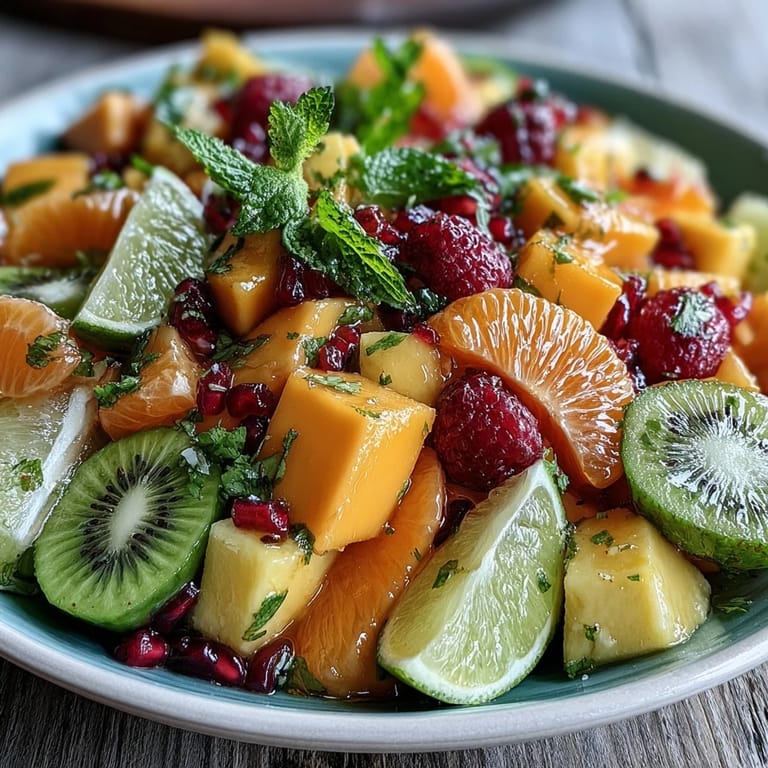
- Tear mint leaves gently and tuck them around the platter, then position lime wedges in the corners where they catch light. Step back and look at it—you want every color visible and nothing crowded.
- Make the dipping sauce if you're using it:
- Whisk yogurt, honey, and lime zest in a small bowl just before serving so the sauce stays thick and doesn't get watery. Taste it and adjust sweetness to your preference.
- Keep everything cold until the moment of serving:
- Cover the platter loosely with plastic wrap and refrigerate until guests arrive—this keeps the fruit crisp and prevents the juices from seeping into one another.
 Save to Pinterest
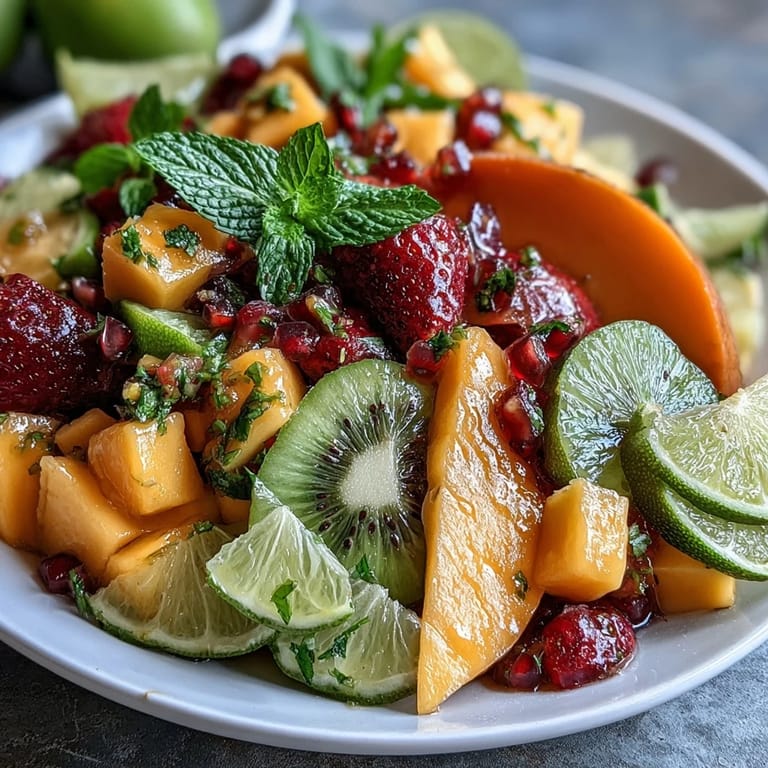
 I'll never forget my grandmother leaning over the platter at that garden party, running her fingers lightly over the mango slices and saying, "This is what summer should taste like." She spent the next twenty minutes telling anyone who'd listen about the time she picked mangoes off a tree in her childhood home, and suddenly this simple fruit arrangement had become a bridge between her memories and everyone else's afternoon. That's the quiet magic of doing one thing well.
Choosing Fruit That Actually Tastes Good
The secret to a showstopping fruit display isn't technique—it's shopping with intention. Visit your farmers market or specialty produce section on a morning when things are freshly stocked, and touch everything before you buy it. Ripe tropical fruits should yield gently to thumb pressure and smell unmistakably fragrant at the stem end; if they're practically rock hard or smell like nothing, they'll taste like nothing too. I learned this the hard way after serving a beautiful platter of underwhelming pineapple, so now I always taste a sample slice at the market before committing to a whole fruit.
The Art of Arranging Without Overthinking
People worry too much about making fruit platters look "perfect," when really the goal is just making colors and shapes interesting enough that your eye wants to move around the platter. Start with your boldest items (mango, pineapple, dragon fruit) as anchors, then fill gaps with smaller fruits and herbs. The arrangement doesn't need to be symmetrical or follow some formal pattern—just avoid dumping all the red strawberries on one side or clustering all the small fruits together. Think of it like painting with fruit: you want your eye to travel around and discover something new every time you look.
Timing and Temperature
This is the only recipe where timing is actually simple: do all your prep work up to two hours before serving, cover it gently, and let the refrigerator do the rest. Chilled fruit tastes sweeter and feels more refreshing, so don't skip this step even if you're in a hurry. The beauty of serving something that's already been chilled is that you can forget about it for an hour while you finish other preparations or actually talk to your guests, something you absolutely cannot do with a dish cooking on the stove.
- Cut mint leaves and add them just before guests arrive so they stay fresh and fragrant rather than wilting on the platter.
- If you're making the yogurt dipping sauce, keep it separate in the refrigerator until the moment you place it on the table.
- On hot days, you can even place the platter on a bed of ice (just underneath the serving dish) to keep everything extra cold throughout the gathering.
 Save to Pinterest
 A tropical fruit display asks so little of you and gives back so much—the satisfied sighs from guests, the colors that practically glow in afternoon light, the knowledge that you've created something memorable without spending hours in the kitchen. That's enough reason to make this again and again.
Recipe FAQs
- → What fruits are best for a tropical display?
Use a variety of ripe tropical fruits like mango, pineapple, papaya, dragon fruit, and kiwi to create vibrant colors and textures.
- → How should the fruits be prepared for serving?
Peel, pit, and slice fruits as needed, arranging them attractively on a large platter or tiered stand to showcase contrasting colors and shapes.
- → What garnishes complement the fruit display?
Fresh mint leaves and lime wedges add color and refreshing aromas, enhancing the visual and taste appeal of the arrangement.
- → Is there a suggested dipping sauce?
An optional vanilla Greek yogurt or coconut yogurt dip mixed with honey or agave and lime zest pairs well for added creaminess and tang.
- → Can this display be customized with different fruits?
Yes, seasonal fruits like passion fruit, star fruit, or melon can be swapped in to suit preference or availability.