 Save to Pinterest
 I discovered this soup on a particularly gray afternoon when my kitchen smelled like nothing and my mood matched. A friend had left a bunch of lemongrass on my counter with a cryptic note, and somehow that grassy, citrusy stalk became the reason I started blending green things into silky, aromatic bowls. It's become my go-to when I want something that feels both indulgent and impossibly light, like eating a cloud that remembers Southeast Asia.
Last winter I made this for my neighbor who'd just moved in, and she sat at my kitchen counter watching the soup transform from a pile of green chaos into something glossy and unified. She asked if I'd added cream, surprised when I said it was just coconut milk and an immersion blender doing the heavy lifting. That's when I realized this soup does something almost magical to both the kitchen and whoever's sitting in it.
Ingredients
- Fresh spinach, 200 g: Choose bunches that feel alive and crisp, not wilted at the edges, because it'll wilt anyway during cooking and you want that starting vitality.
- Fresh coriander, 1 large bunch: Use both leaves and stems—the stems hold more flavor than people realize and dissolve beautifully into the blend.
- Lemongrass, 1 stalk: Peel away those tough papery outer layers until you reach the tender pale heart; that's where the real fragrance lives.
- Onion, 1 medium: A yellow or white onion works equally well, but the sweetness they contribute is essential to balancing the herbaceous notes.
- Garlic, 2 cloves: Mince it finely so it distributes evenly and doesn't leave harsh little pockets in the finished soup.
- Fresh ginger, 2 cm piece: Grate it on a microplane rather than chopping, which releases more of its warming oils throughout the soup.
- Coconut milk, 400 ml: Full-fat is non-negotiable here—light versions separate weirdly and leave an odd texture that cheap shortcuts aren't worth.
- Vegetable stock, 750 ml: Use something flavorful you'd actually drink, not the sad bouillon corner of your pantry.
- Soy sauce or tamari, 1 tbsp: This adds umami depth that makes people ask if there's hidden chicken in a completely plant-based soup.
- White pepper, 1/2 tsp: It's gentler than black pepper and won't create dark specks that muddy the bright green color.
- Salt: Taste as you go because coconut milk can mask seasoning until the very end.
Tired of Takeout? 🥡
Get 10 meals you can make faster than delivery arrives. Seriously.
One email. No spam. Unsubscribe anytime.
Instructions
- Start with aromatics:
- Heat your saucepan over medium heat and add a splash of oil, then watch the onion soften and turn translucent—this usually takes about 3 minutes and you'll know it's ready when it smells sweet instead of sharp. Don't rush this part because you're building the foundation that everything else rests on.
- Bloom the flavor base:
- Add your minced garlic, grated ginger, and sliced lemongrass and let them cook for 2 minutes while stirring, so you actually see the kitchen fill with that incredible herbal fragrance. This is where your soup stops smelling ordinary.
- Wilt the greens:
- Throw in the spinach and coriander (save a handful for garnish) and watch them collapse into the pot like a green avalanche—this happens in about 2 minutes and feels almost like magic. The volume shrinks to almost nothing once it's wilted, which surprises people every time.
- Simmer everything together:
- Pour in your coconut milk and vegetable stock, bring it to a gentle boil, then drop the heat and let it simmer quietly for 10 minutes. This gives all the flavors time to get to know each other properly.
- Blend into creaminess:
- Remove from heat and use your immersion blender to puree everything until it's completely smooth and the color shifts to this gorgeous pale jade-green. If you're using a regular blender, work in batches and be careful because hot soup can splash unpredictably.
- Season and taste:
- Stir in your soy sauce, white pepper, and salt, then simmer for another 2 minutes so the seasonings integrate rather than sitting on top. Taste it now and adjust because this is your last chance before it goes into bowls.
- Serve with intention:
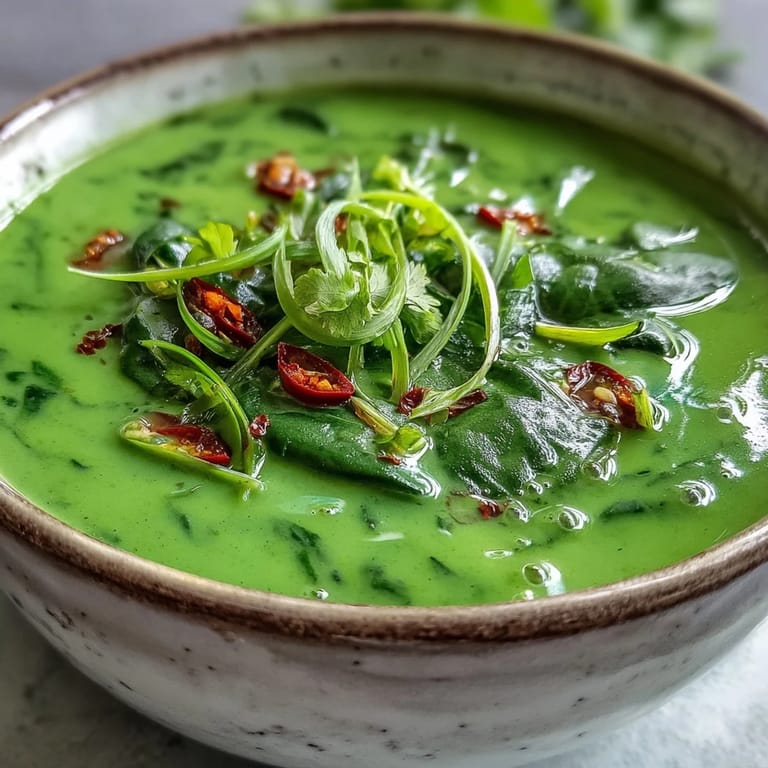
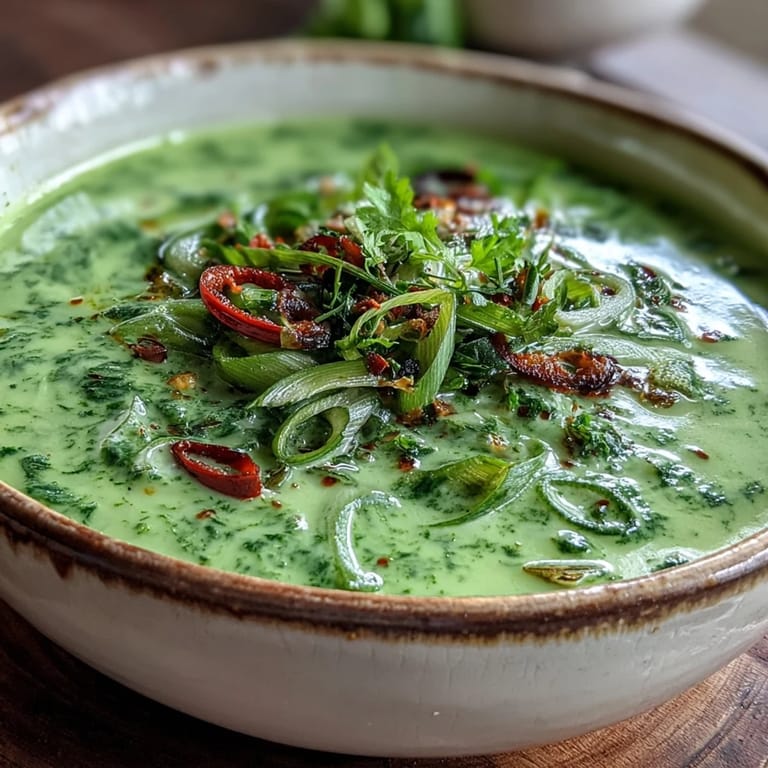
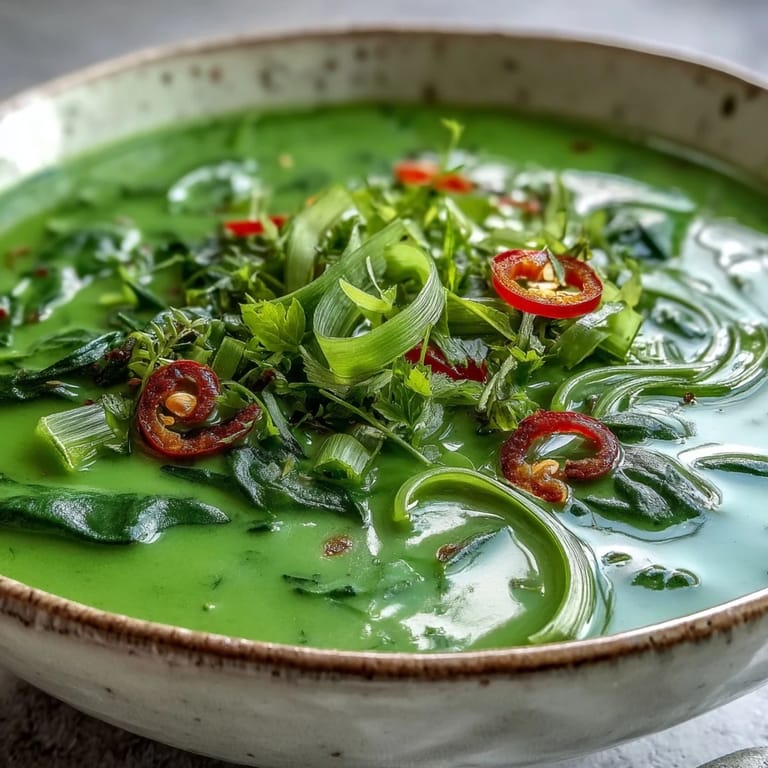
- Ladle into bowls and top with those reserved coriander leaves and maybe some sliced red chili if you want heat. Hand people a hot bowl that steams and smells like somewhere warm and green.
 Save to Pinterest
 I served this once to someone going through a difficult stretch, and they came back weeks later saying they'd been making it every few days because it was the only thing that tasted like care. That's when I understood this soup isn't just about technique or ingredients—it's about creating something nourishing that somehow knows how to sit with you quietly.
The Lemongrass Moment
Lemongrass is one of those ingredients that demands your attention from the moment you touch it—it's tough and fibrous until you know what you're doing, and then suddenly it becomes this delicate essence that transforms everything around it. I spent an embarrassing amount of time trying to chop it with a regular knife before someone showed me that slicing it thinly and letting the blender do the work was the actual secret. Now when I see that pale purple base and smell that first herbal note, I know the soup is already half-made in my mind.
Why This Soup Works as Comfort Food
There's something about a soup that's both elegant and effortless that makes people feel seen when you serve it to them. The coconut milk catches the light so it looks fancy, the herbs make it feel fresh, but it's ultimately so simple that you're not exhausted by the time anyone sits down to eat it. I've noticed that people who claim they don't cook much will often try this one, and then they'll text asking how to make it with variations like adding curry paste or swapping the stock.
Variations and Personal Additions
This soup is forgiving enough that you can riff on it without it falling apart, which is how it became my testing ground for learning what actually matters in a recipe. I've added lime juice right before serving for brightness that cuts through the richness, stirred in a spoonful of curry paste for depth, even crumbled tofu on top for people who wanted protein. The structure stays strong no matter what you add, which is the mark of a recipe that really understands itself.
- A squeeze of lime juice just before serving lifts the entire flavor profile and makes everything taste more alive.
- If you want heat, add a chopped green chili with the garlic and ginger so it mellows into the base rather than shouting.
- Serve alongside crusty bread or steamed jasmine rice to turn a bowl of soup into an actual meal.
 Save to Pinterest
 This is the kind of soup that reminds you why you started cooking in the first place—not for Instagram or validation, but because turning a handful of ingredients into something that makes people feel better is a small and worthwhile magic. Make it for yourself on a quiet day, make it for someone who needs it, or just keep it in your back pocket for whenever you want to prove to your kitchen that you know what you're doing.
Recipe FAQs
- → Can I use frozen spinach instead of fresh?
Yes, you can use frozen spinach. Use about 300g frozen spinach and add it directly to the pot. No need to thaw first, just adjust cooking time slightly to ensure it's fully heated through.
- → How do I prepare lemongrass for this soup?
Remove the tough outer layers of the lemongrass stalk, then finely slice the tender inner part. Since the soup is blended, the lemongrass will incorporate smoothly and release its aromatic oils during cooking.
- → Can I make this soup ahead of time?
Absolutely. This soup stores well in the refrigerator for up to 3 days. Reheat gently on the stovetop, adding a splash of vegetable stock if it has thickened. The flavors often deepen overnight.
- → What can I substitute for coconut milk?
For a lighter version, use cashew cream or a blend of silken tofu with vegetable stock. However, coconut milk provides the authentic creamy texture and subtle sweetness that complements the herbs beautifully.
- → How can I add more protein to this soup?
Add cubed firm tofu, cooked chickpeas, or white beans during the last few minutes of simmering. You can also serve it alongside a protein-rich side dish like edamame or tempeh.
- → Is this soup spicy?
The base version is not spicy, with only mild white pepper for warmth. To add heat, include chopped green or red chilies when sautéing the aromatics, or garnish with sliced fresh chili to taste.