 Save to Pinterest
 The smell of garlic hitting hot olive oil still makes me stop whatever I'm doing. It's the sound that comes next—the sizzle of meat browning in the pan—that tells me everything is going right. I learned to make lasagna not from a cookbook, but from watching my neighbor Maria layer noodles in her kitchen on a rainy Sunday. She never measured anything, just tasted and adjusted, and somehow it always turned out perfect.
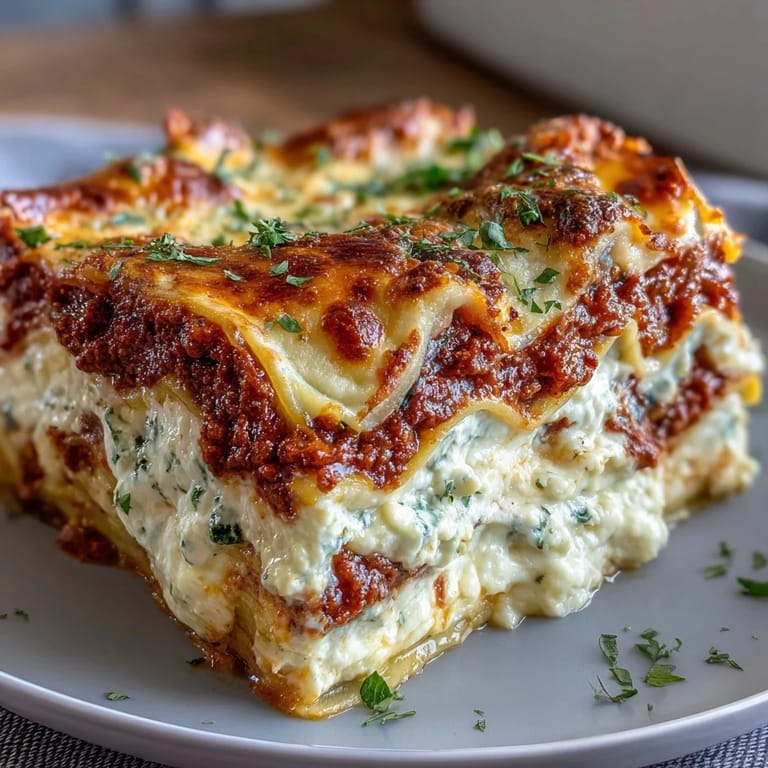
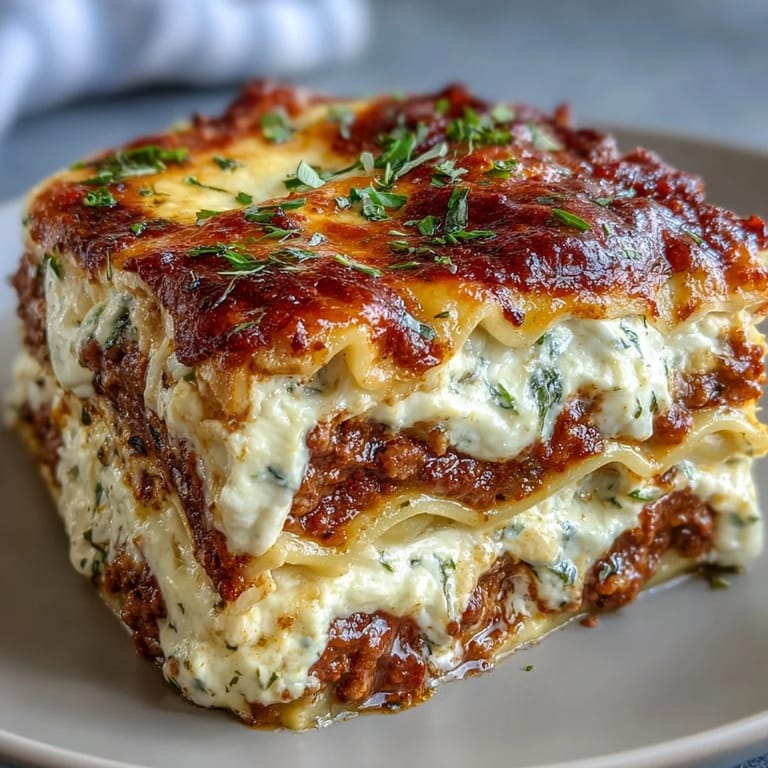
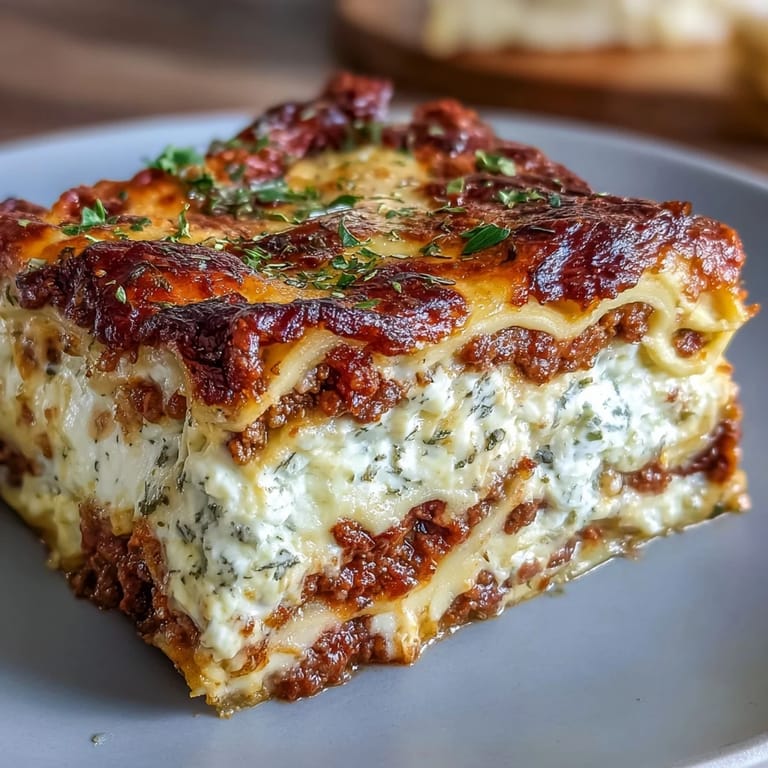
I made this for my brother's birthday dinner three years ago, and he asked for it again the next year instead of cake. There's something about pulling a bubbling, golden-topped lasagna out of the oven that makes people lean in closer. The cheese stretches when you cut into it, and everyone suddenly gets quiet while they eat. It became our family's official celebration meal without anyone officially deciding it.
Ingredients
- Lasagna noodles (12 sheets, uncooked): Using them uncooked saves time and they absorb the sauce beautifully, just make sure your sauce is slightly looser than usual.
- Ricotta cheese (15 oz): This creates the creamy layer that balances the rich meat sauce, and mixing it with egg helps it set perfectly.
- Egg (1 large): Binds the ricotta so it doesn't slide around when you cut into the lasagna.
- Mozzarella cheese (4 cups, shredded): The star of that stretchy, melty top layer, use whole milk mozzarella for the best texture.
- Parmesan cheese (1 cup, grated): Adds a sharp, nutty finish and helps the top brown to golden perfection.
- Ground beef (1 lb, lean): Provides hearty flavor without making the sauce too greasy, drain it well after browning.
- Italian sausage (1 lb, casing removed): This is where most of the flavor comes from, choose sweet or spicy depending on your mood.
- Marinara sauce (4 cups): Homemade is wonderful, but a good jarred sauce works just as well and saves you an hour.
- Garlic (4 cloves, minced): Fresh garlic makes all the difference, it blooms in the olive oil and perfumes the whole sauce.
- Olive oil (2 tablespoons): Keeps the garlic from burning and adds a subtle richness to the meat.
- Fresh basil (¼ cup, chopped): Stir it into the sauce at the end so it stays bright and fragrant.
- Salt (1 teaspoon): Taste as you go, especially if your marinara is already seasoned.
- Black pepper (½ teaspoon): Freshly ground pepper has more punch than pre-ground.
Tired of Takeout? 🥡
Get 10 meals you can make faster than delivery arrives. Seriously.
One email. No spam. Unsubscribe anytime.
Instructions
- Get the oven ready:
- Preheat to 375°F so it's hot and even when your lasagna goes in. This temperature cooks the noodles through without drying out the cheese.
- Start the sauce base:
- Heat olive oil in a large skillet over medium heat, then add minced garlic and let it sizzle until it smells amazing, about a minute. Don't let it brown or it will taste bitter.
- Brown the meat:
- Add ground beef and sausage, breaking it up with a wooden spoon as it cooks until no pink remains, about 8 to 10 minutes. Drain off the excess fat so your lasagna isn't greasy.
- Build the sauce:
- Stir in marinara, salt, pepper, and chopped basil, then let it simmer gently for 10 minutes. This lets all the flavors get to know each other.
- Mix the ricotta layer:
- In a bowl, combine ricotta and egg until smooth and creamy. This mixture will set as it bakes and hold everything together.
- Start layering:
- Spread a thin layer of meat sauce on the bottom of a 9x13 inch baking dish to keep the noodles from sticking. Then lay down 4 uncooked noodles, overlapping them slightly.
- Add the first ricotta layer:
- Spread half the ricotta mixture over the noodles, then sprinkle a third of the mozzarella on top and cover with more meat sauce. Press gently so everything settles.
- Repeat the layers:
- Add another layer of noodles, the rest of the ricotta, another third of mozzarella, and more sauce. You're building flavor in every bite.
- Finish strong:
- Top with the last 4 noodles, all remaining meat sauce, then pile on the rest of the mozzarella and all the Parmesan. This top layer will turn golden and bubbly.
- Bake covered:
- Cover tightly with foil and bake for 25 minutes so the noodles steam and cook through. The foil traps moisture.
- Brown the top:
- Remove the foil and bake another 15 minutes until the cheese is golden and bubbling at the edges. Watch it closely so it doesn't burn.
- Rest before serving:
- Let the lasagna sit for at least 15 minutes after baking so the layers firm up and don't slide apart when you cut. It's worth the wait.
 Save to Pinterest
 The first time I served this to friends, someone said it tasted like the kind of meal you remember years later. That stuck with me. It's not fancy or complicated, but there's something about the way the flavors come together that feels like home. We ended up sitting at the table long after the plates were empty, just talking and laughing.
Making It Your Own
I've tucked sautéed spinach and mushrooms between the ricotta layers when I want something a little lighter and earthier. You can swap the sausage for ground turkey if you're watching fat, or add a pinch of red pepper flakes to the sauce for heat. One friend uses cottage cheese instead of ricotta and swears it's just as good. The structure stays the same, but the flavor shifts with whatever you have on hand or whatever sounds good that day.
Pairing and Serving
A simple green salad with lemon vinaigrette cuts through the richness perfectly, and crusty bread is non-negotiable for soaking up any extra sauce on the plate. I usually open a bottle of Chianti or another medium-bodied red, something with enough backbone to stand up to the meat and cheese. If you're serving a crowd, this pairs well with roasted vegetables or garlic bread on the side. Keep it simple so the lasagna stays the star.
Storing and Reheating
Leftovers keep in the fridge for up to four days, and I actually prefer them reheated because the flavors deepen overnight. You can freeze individual portions wrapped tightly in foil for up to two months, then reheat straight from frozen in a 350°F oven. If you're making it ahead, assemble the whole thing, cover it tightly, and refrigerate for up to 24 hours before baking.
- Reheat covered with foil to keep it from drying out, then uncover for the last few minutes.
- Add a tablespoon of water before reheating if it looks dry.
- Let frozen portions thaw in the fridge overnight for more even reheating.
 Save to Pinterest
 This lasagna has become the dish I make when I want to show someone I care, not because it's hard, but because it takes time and fills the house with warmth. It's the kind of meal that turns a regular night into something worth remembering.
Recipe FAQs
- → Can I make this ahead of time?
Yes, assemble the dish up to 24 hours ahead and refrigerate. Add 10-15 minutes to the baking time if baking cold from the refrigerator.
- → Can I freeze lasagna?
Absolutely. Wrap the unbaked dish tightly with foil and freeze for up to 2 months. Thaw overnight in the refrigerator before baking as directed.
- → Why is resting important?
Resting allows the layers to set and the cheese to firm slightly. This makes cutting cleaner and helps portions hold their shape when served.
- → Can I use no-boil noodles?
Yes, no-boil noodles work perfectly and may require slightly less sauce. Regular uncooked noodles also work as they absorb liquid during baking.
- → How do I know when it's done?
The cheese should be melted, golden, and bubbling around the edges. A knife inserted in the center should come out hot to the touch.