 Save to Pinterest
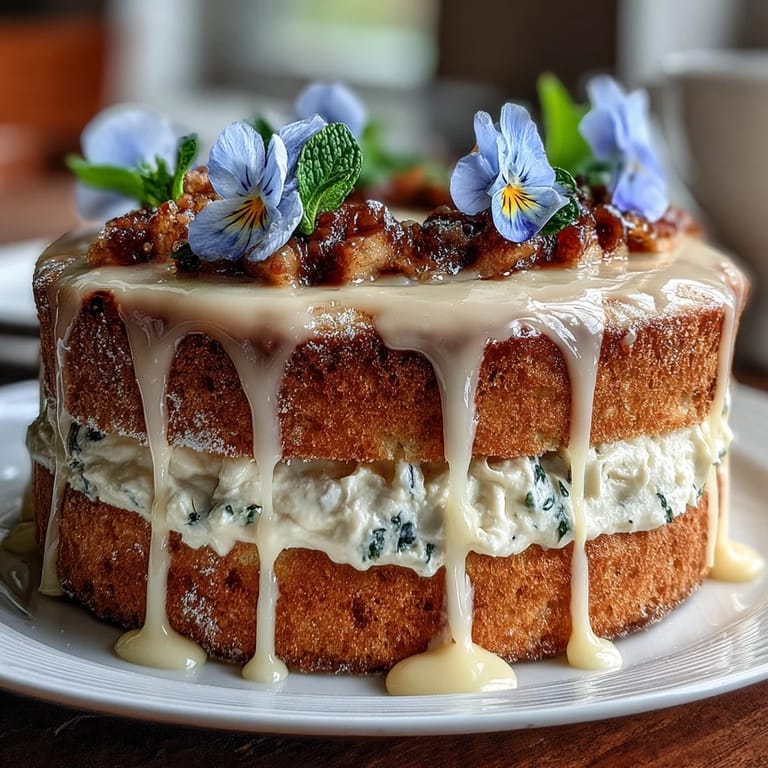
 Last spring, my neighbor showed up at the garden gate with a basket of pansies she'd grown, asking if I knew what to do with them besides arrange them in a vase. That afternoon, I found myself sketching out this cake—three tender layers stacked with bright lemon curd and clouds of cream, topped with those very flowers turning it into something almost too beautiful to cut into. It became the centerpiece of an impromptu tea party that weekend, and watching people hesitate before taking the first slice because they didn't want to disturb the blooms told me everything about why this cake matters.
I made this the morning of my sister's baby shower, and the stress of getting three layers to bake evenly at the same time melted the second I pulled them from the oven golden and springy. By the time I'd layered it with that glossy lemon curd and piped the whipped cream, the whole kitchen smelled like a lemon grove mixed with butter, and I knew it was going to be the thing people talked about long after the gifts were opened.
Ingredients
- All-purpose flour: The foundation of a tender crumb—measuring by weight here keeps the cake from becoming dense, which is the whole point of a naked cake.
- Baking powder and baking soda: This combination gives you a gentle rise that creates those pillowy layers without the dome that would make assembly awkward.
- Room temperature butter and eggs: Cold ingredients won't emulsify properly, so take them out of the fridge about an hour before—I learned this the hard way when my first attempt came out dense.
- Buttermilk: The acidity tenderizes the crumb and keeps everything moist; regular milk won't give you the same delicate texture.
- Lemon zest: Don't skip this—it's where the subtle perfume lives that makes you want another bite.
- Freshly squeezed lemon juice for the curd: Bottled juice tastes flat by comparison, and since the curd is the star, don't compromise here.
- Egg yolks for the curd: The yolks create that silky, luxurious texture; using whole eggs will make it too custard-like.
- Heavy cream, cold: Whipping cold cream is faster and gives you more control over the peaks, which matters when you're building layers.
- Edible flowers: Buy from specialty grocers or farmers markets where you know the source—pesticide-free is non-negotiable.
Tired of Takeout? 🥡
Get 10 meals you can make faster than delivery arrives. Seriously.
One email. No spam. Unsubscribe anytime.
Instructions
- Get your mise en place ready:
- Preheat to 350°F and line three 8-inch pans with parchment—this takes two minutes and prevents the catastrophe of batter sticking to the pan. While the oven comes to temperature, whisk your dry ingredients together in one bowl so you're not hunting for the baking soda mid-mixing.
- Cream butter and sugar until it's almost fluffy:
- Three minutes of beating transforms pale butter into something cloud-like; this is where the cake gets its tender structure, so don't rush it. You'll know you're done when the mixture is noticeably lighter in color and you can draw a line through it with a finger.
- Add eggs one at a time, beating between each:
- Rushing this step creates a grainy batter that bakes into an uneven cake, so give each egg a moment to fully incorporate. The mixture might look slightly broken after the second egg, but it'll come together by the end.
- Alternate dry ingredients with buttermilk in three additions:
- Start and end with dry so the batter doesn't separate; mixing until just combined means stopping as soon as you see no white flour streaks. Overmixing develops gluten and makes the cake tough, which defeats the whole delicate purpose.
- Bake until a toothpick comes out clean:
- Watch around the 25-minute mark—ovens vary, and a dry cake is sadder than an underbaked one. The layers should be golden and springy when you touch the center gently.
- Cool properly before moving forward:
- Ten minutes in the pan lets the structure set enough to unmold without crumbling; the wire rack prevents steam from making the bottom soggy. I learned to place the rack directly on the counter instead of a baking sheet because trapped heat underneath keeps the bottom moist.
- Make the lemon curd while cakes cool:
- Set your heatproof bowl over simmering (not boiling) water—if the water touches the bowl, the heat's too direct and the eggs will scramble. Whisk constantly for that silky texture, about 8 to 10 minutes, until it coats the back of a spoon and you can draw a line through it.
- Whip the cream to stiff peaks:
- Start with truly cold cream straight from the fridge; it whips faster and holds its shape longer. Stop as soon as stiff peaks form—one more second of the mixer and you're making butter, which I've done and it's not salvageable.
- Assemble with confidence:
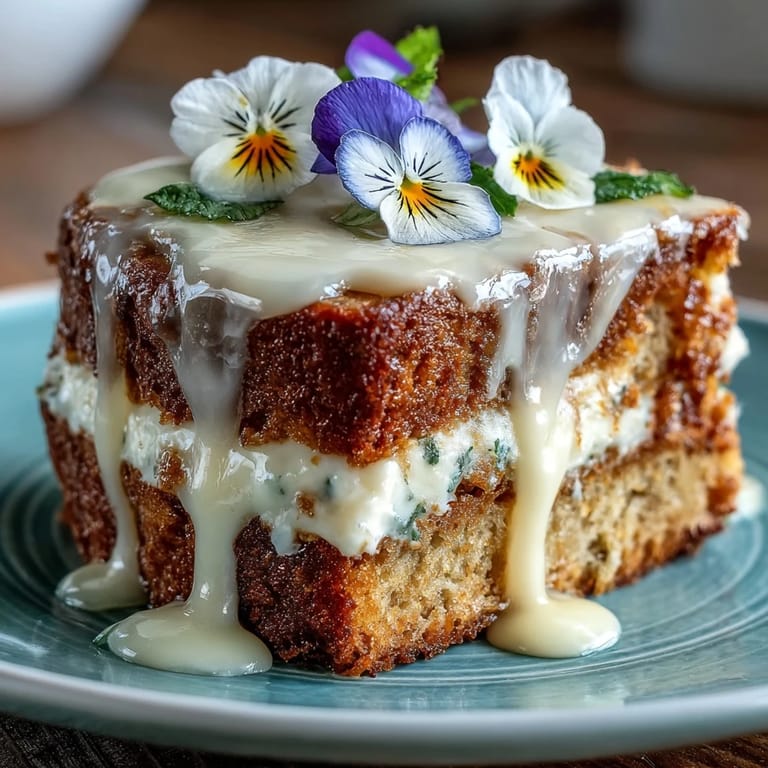
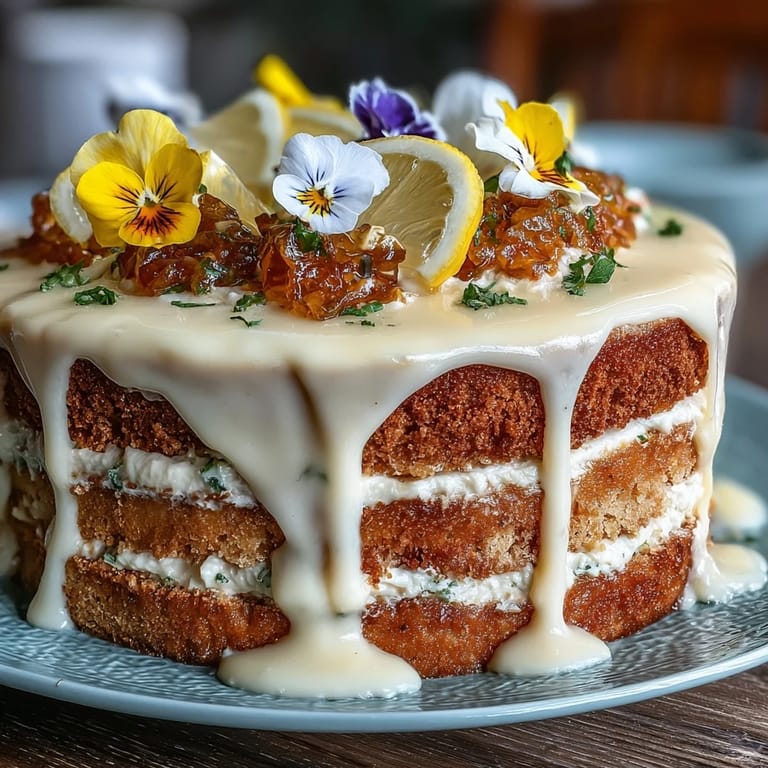
- Place the first layer on your serving platter, spread half the lemon curd across it, then a generous layer of whipped cream. Stack the second layer and repeat, then crown it with the third layer and smooth whipped cream on top, leaving the sides semi-naked so you see those gorgeous layers.
- Decorate just before serving:
- Arrange edible flowers on top and around the cake in whatever pattern feels right—there's no wrong way. If you add them too early, moisture makes them wilt, so this is a last-minute flourish.
 Save to Pinterest
 There was a moment when my friend cut into the cake and saw those three distinct layers rimmed with lemon-yellow curd, and she just stopped talking. Moments like that remind me why I spend an afternoon in the kitchen making something that takes five minutes to eat—it's about creating something beautiful enough to pause over.
Why This Cake Works for Spring
Spring is all about brightness and lightness, and this cake captures both—the lemon gives you that citrus zing when everything around you is blooming, and the naked style shows off the layers instead of hiding them under a thick frosting. The edible flowers aren't just decoration; they're a nod to the season, making this cake feel connected to the moment you're eating it.
Troubleshooting Your Layers
If your cakes dome in the middle instead of staying flat, the oven temperature might be slightly off—I solved this by investing in an oven thermometer, which cost fifteen dollars and changed my baking life. If layers crack when you remove them, they might have cooled too long in the pan; fifteen minutes is the sweet spot before the structure sets too firmly and breaks when you try to unmold.
Variations and Pairing Ideas
I've made this with raspberry jam layered between the curd and cream, which adds a subtle tartness that plays beautifully with the lemon. The mascarpone swap mentioned in the notes isn't just about richness—it also gives you a tangy undertone that makes the whole cake feel more sophisticated. You can also try infusing the whipped cream with a touch of elderflower cordial or rose water if you want to lean into those floral notes.
- Fresh berries scattered on top just before serving add color and a textural contrast that feels unexpected.
- A drizzle of honeycomb or candied lemon peel on top works beautifully if you want something slightly more structured than just flowers.
- This cake pairs perfectly with sparkling wine, iced tea with mint, or even a delicate white wine—let the season guide your choice.
 Save to Pinterest
 This cake has become my signature spring dessert, the one people ask for when the season turns and the garden starts to bloom. Make it, and you'll understand why—it's elegant enough for a celebration but approachable enough to make on a Tuesday afternoon just because you want something that tastes like spring.
Recipe FAQs
- → What type of flowers are safe for garnishing?
Use pesticide-free, edible flowers such as pansies, violets, marigolds, or nasturtiums for safe decoration.
- → How do I make the lemon curd smooth?
Whisk lemon juice, zest, sugar, and egg yolks over simmering water constantly until thickened, then stir in butter off the heat for a creamy finish.
- → Can I prepare the cake layers ahead of time?
Yes, baking and chilling the sponge layers before assembly helps maintain structure and ease layering.
- → What is the best method to achieve stiff whipped cream peaks?
Use cold heavy cream and beat with powdered sugar and vanilla until firm peaks form, then keep refrigerated until serving.
- → Are there any recommended substitutions for the whipped cream?
Replacing half the whipped cream with mascarpone creates a richer, creamier texture without compromising lightness.